
 (844) 230-7676
 Idioma

What is Copper Smelting?
- Process: Copper smelting involves heating copper ore or reclaimed compounds to extract elemental copper.
- By-products: Smelting produces toxic emissions, including heavy metals like lead (Pb), arsenic (As), cadmium (Cd), and mercury (Hg).
- Environmental impact: Sulfur dioxide (SO₂) and particulate matter released during smelting can travel long distances, contaminating soil, water, and air.
How Copper Smelting Causes Lead Contamination
- Lead fume emissions: Pyrometallurgical smelting releases lead particles into the air.
- Industrial waste: Slags, dust, and ashes from smelting contain toxic metals.
- Water and soil contamination: Heavy metals leach into groundwater or run off into rivers, while wind disperses particles into residential areas.
- Long-term exposure: Lead is bioaccumulative, meaning it builds up over time in humans and wildlife.
Health Effects of Lead Exposure
Lead exposure is particularly dangerous for children and pregnant women. Key health risks include:- Nervous system damage
- Lower IQ and cognitive impairments in children
- Developmental delays and behavioral issues
- Stomach pain, vomiting, fatigue
- Severe neurological damage in high-exposure cases.
Environmental Consequences of Copper Smelting
- Air pollution: SO₂ damages crops, trees, and buildings, and contributes to acid rain.
- Soil contamination: Toxic metals from slag and dust pollute farmland and residential areas.
- Water pollution: Heavy metals leach into groundwater or enter rivers and streams.
- Ecological harm: Metals like lead and arsenic negatively affect biota, while small particles penetrate deep into the respiratory system of humans and animals.
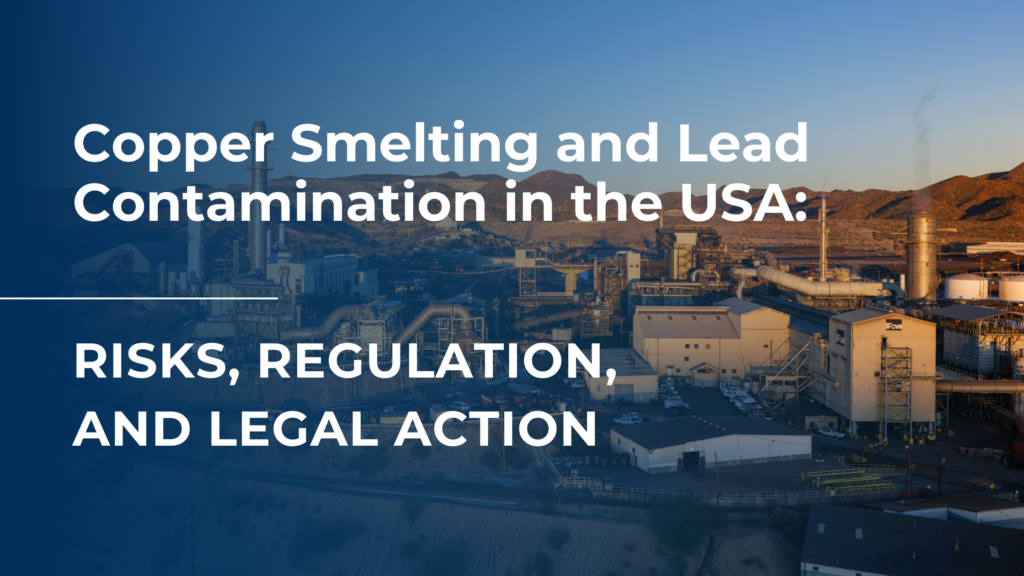
Miami, Arizona Smelter
- One of the last two copper smelters in the U.S., operated by Freeport-McMoRan.
- Processes copper for electronics, construction, and other industries.
- Emissions in 2024 included 11.6 tons of lead y 2.5 tons of arsenic.
- Nearby San Carlos Apache Tribe lands recorded arsenic levels 150 times higher than state health guidelines.
- Legal and regulatory disputes: Freeport challenged stricter EPA rules, while the tribe argued the standards were insufficient to protect public health.
Why Legal Action Matters
- Communities affected by smelter pollution can face severe health consequences.
- Environmental litigation helps:
- Enforce compliance with federal and state regulations
- Hold corporations accountable for pollution
- Seek remediation of contaminated sites
- Pursue compensation for affected residents
FAQs About Lead Contamination and Copper Smelting
Q: Who is most at risk from lead exposure? A: Children under 7, pregnant women, and unborn children are especially vulnerable to lead toxicity. Q: How does lead exposure occur? A: Through inhalation of dust, ingestion of contaminated soil or water, and consumption of contaminated food. Q: Can industrial emissions be reduced? A: Yes. Modern pollution-control technologies like baghouses can capture hazardous particulates and reduce emissions. Q: What can communities do if they are affected? A: Residents can seek legal assistance from environmental litigation experts to enforce regulations and pursue justice.Take Action: Protect Your Community and Health
Copper smelting, while economically important, poses serious risks to human health and the environment. Lead contamination affects children, wildlife, and local communities, making regulatory oversight and legal advocacy critical. At Napoli Shkolnik, we are actively investigating and accepting eligible claims related to the Miami Cooper Smelter in Arizona. If you lived, worked, or attended school in Miami, Claypool, or Globe, AZ, you may be entitled to pursue a claim. Not sure whether you were exposed or if you qualify? You can learn more aquí. If you know someone who needs information in Spanish, they can read more aquí.