
 (844) 230-7676
 Idioma

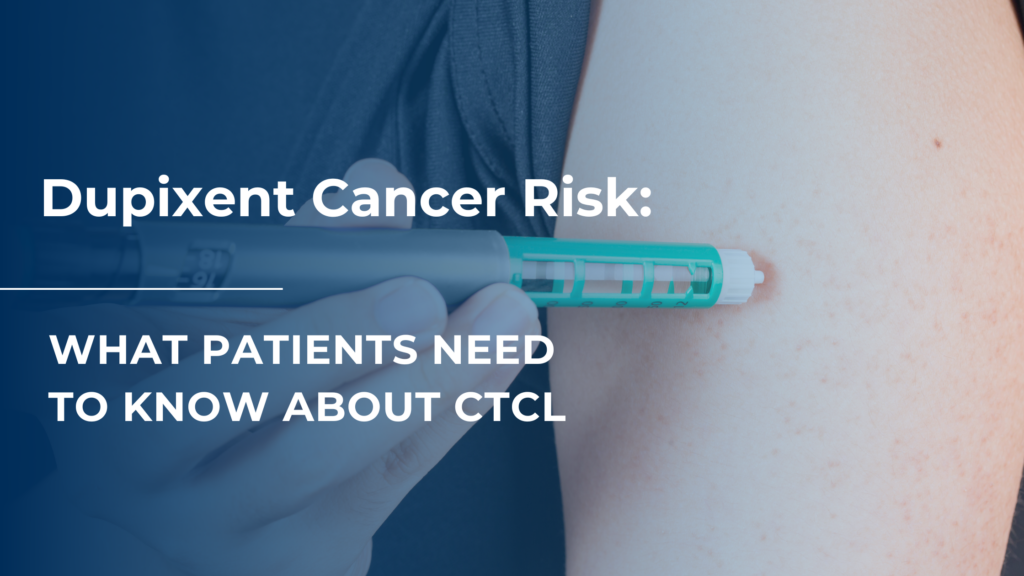
Emerging Research Raises Questions About Dupixent’s Safety Profile
Dupixent (dupilumab) has become one of the most widely prescribed biologic medications for chronic inflammatory conditions, helping over one million patients worldwide manage diseases like eczema and asthma. Manufactured by Sanofi and Regeneron, the drug is often seen as a breakthrough for individuals struggling with hard-to-treat conditions.
Sin embargo, recent studies have raised concerns about a possible link between Dupixent and a rare form of cancer known as cutaneous T-cell lymphoma (CTCL). For patients and families, understanding these risks is critical—especially when evaluating long-term treatment options.
What Is Dupixent and How Does It Work?
Dupixent (dupilumab) has become one of the most widely prescribed biologic medications for chronic inflammatory conditions, helping over one million patients worldwide manage diseases like eczema and asthma. Manufactured by Sanofi and Regeneron, the drug is often seen as a breakthrough for individuals struggling with hard-to-treat conditions.
Derived from living cells and designed to target specific components of the immune system.
It works by blocking proteins known as interleukin-4 (IL-4) and interleukin-13 (IL-13), which play a key role in inflammation. By interrupting these pathways, Dupixent helps reduce symptoms in several chronic conditions.
Conditions Treated with Dupixent
Dupixent is approved to treat or assist in treating:
- Moderate-to-severe atopic dermatitis (eczema)
- Asma, including steroid-dependent and eosinophilic asthma
- Chronic rhinosinusitis with nasal polyps
- Eosinophilic esophagitis
- Prurigo nodularis
- Chronic spontaneous urticaria
- Bullous pemphigoid
- Chronic obstructive pulmonary disease (COPD)
For many patients, Dupixent has provided significant relief where other treatments failed. But like all medications, it carries serious potential risks.
What Is Cutaneous T-Cell Lymphoma (CTCL)?
Cutaneous T-cell lymphoma (CTCL) is a rare type of no linfoma de Hodgkin that primarily affects the skin. It occurs when certain immune cells (T-cells) become cancerous and accumulate in the skin.
Early Symptoms Often Misdiagnosed as Eczema
- Persistent rash or patches that may resemble eczema
- Itching (often severe)
- Thickened plaques or tumors on the skin
- Skin discoloration or scaling
Since CTCL can mimic common skin conditions like eczema, it is often misdiagnosed or diagnosed late, making awareness especially important.
Is There a Link Between Dupixent and CTCL?”
Key Findings From Recent Studies:
Scientific studies have raised concerns about a potential association between Dupixent and CTCL:
- A study published in the Journal of the American Academy of Dermatology found that patients using Dupixent had approximately a fourfold increased risk of developing CTCL compared to those who did not use the drug.
- A second analysis published in Dermatologic Therapy confirmed an elevated risk, particularly:
- In patients over age 60
- Within the first year of treatment
These findings do not definitively prove causation, but they highlight a potential safety signal that requires further investigation.
Adverse Event Reports and FDA Data
De acuerdo con la FDA’s Adverse Event Reporting System (FAERS):
- Más que 87,000 adverse events involving Dupixent or dupilumab have been reported in 2025
- Among these reports are cases involving cutaneous T-cell lymphoma (CTCL)
It is important to understand that FAERS data is based on voluntary, self-reported information. While it cannot establish a direct cause-and-effect relationship, it is often used to identify potential safety concerns that warrant further study.
What Symptoms Should You Watch For?
If you or a loved one is taking Dupixent, it’s important to monitor for unusual or persistent skin symptoms, including:
- Rashes that do not improve or worsen over time
- Skin patches that change in appearance
- Severe or persistent itching
- New or unusual skin growths
If you experience any of these symptoms, seek evaluation from a qualified medical professional as soon as possible.
Legal Implications: Can You File a Dupixent Lawsuit?
Pharmaceutical companies have a legal obligation to ensure their products are safe and to adequately warn patients and healthcare providers of potential risks.
If evidence shows that:
- The risks of CTCL were not properly disclosed, o
- Patients were not adequately warned about potential cancer risks,
Then, affected individuals may be entitled to pursue compensation.
Who Qualifies for a Claim?
- You were prescribed Dupixent
- You were later diagnosed with cutaneous T-cell lymphoma (CTCL)
- You were not warned about this potential risk
Contact Our Attorneys for a Free Case Review
If you or someone you love has been diagnosed with CTCL after using Dupixent, you do not have to navigate this situation alone.
Our experienced product liability attorneys are actively investigating potential claims related to Dupixent and cancer risk. We can help determine whether you may be eligible to pursue compensation for:
- Gastos médicos
- Lost income
- Dolor y sufrimiento
- Other damages
Contáctenos today for a free, no-obligation consultation. There are no upfront costs, and you pay nothing unless we recover compensation on your behalf.